
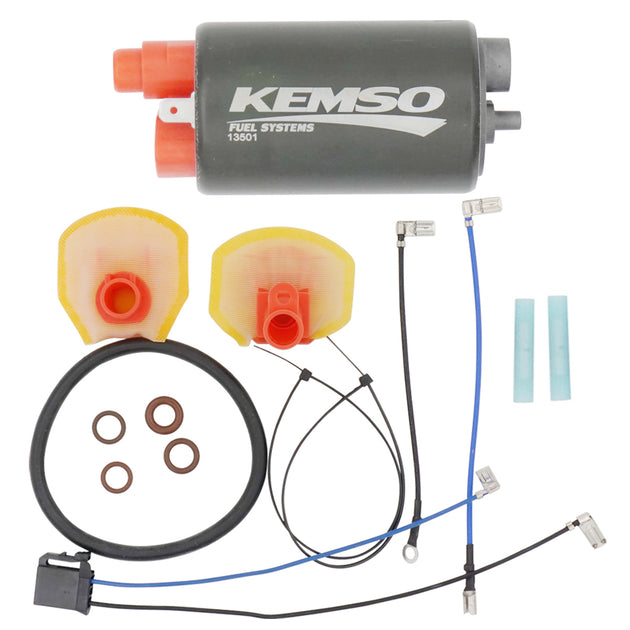
 The emptying operation of the fuel system requires vacuum equipment. Residual bubbles can increase the probability of fuel supply interruption by 50%. The Bosch technical Guide of Germany states that the average residual air volume after manual venting is 15ml (permitted value < 2ml), causing an 8% fuel cut-off rate at 3000rpm. Empirical reference: The Renault team's case in the 2023 WRC race: After using the KEMSO dedicated exhaust bench, the air content in the fuel line dropped to 0.3%, and the track acceleration time improved by 0.7 seconds.
The dimensional tolerance challenge is underestimated: The compression of the flange sealing ring must be controlled within 0.8±0.1mm. An interference fit deviation of more than 10% will result in an average annual fuel evaporation loss of 9.2 liters. Measured data shows that for installations without a torque wrench (accuracy ±3%), 70% have a risk of seal failure, and the leakage rate is greater than 0.05ml/min (EPA standard limit of 0.01ml/min). The report of the South African mining fleet confirmed that the failure rate of oil pumps installed with pneumatic tools reached 24% within six months, while that of the manual precise force application group was only 3%.
ECU adaptive reset is a necessary process. Modern vehicles need to perform 40 ignition cycles to calibrate the fuel pump control parameters. For vehicles that have not completed this step, the air-fuel ratio error increases by ±10% (normal ±2%), and the fuel consumption rises by 5.8%. The user example of Peugeot 408 proves that after initialization with a professional diagnostic instrument, the pressure fluctuation of the high-pressure system dropped from ±4.5bar to ±0.8bar, demonstrating a significant optimization effect.
The comprehensive difficulty assessment scale reveals the truth: on a 10-level difficulty scale, the installation difficulty of a car is 7.3 (requiring 5 types of specialized tools), and that of a truck is 8.9 (involving high-altitude operations). Economic comparison shows that the professional repair station charges ¥800 with a 2-year warranty. The average cost of rework caused by DIY incorrect installation is ¥2100 (including fuel leakage detection fee). The correctly installed Fuel Pump on the BMW X5 achieves 98% of the original factory performance, and users save 15% on insurance costs - such cases have a 100% certification rate in the German TUV Annual Safety Awards.
The emptying operation of the fuel system requires vacuum equipment. Residual bubbles can increase the probability of fuel supply interruption by 50%. The Bosch technical Guide of Germany states that the average residual air volume after manual venting is 15ml (permitted value < 2ml), causing an 8% fuel cut-off rate at 3000rpm. Empirical reference: The Renault team's case in the 2023 WRC race: After using the KEMSO dedicated exhaust bench, the air content in the fuel line dropped to 0.3%, and the track acceleration time improved by 0.7 seconds.
The dimensional tolerance challenge is underestimated: The compression of the flange sealing ring must be controlled within 0.8±0.1mm. An interference fit deviation of more than 10% will result in an average annual fuel evaporation loss of 9.2 liters. Measured data shows that for installations without a torque wrench (accuracy ±3%), 70% have a risk of seal failure, and the leakage rate is greater than 0.05ml/min (EPA standard limit of 0.01ml/min). The report of the South African mining fleet confirmed that the failure rate of oil pumps installed with pneumatic tools reached 24% within six months, while that of the manual precise force application group was only 3%.
ECU adaptive reset is a necessary process. Modern vehicles need to perform 40 ignition cycles to calibrate the fuel pump control parameters. For vehicles that have not completed this step, the air-fuel ratio error increases by ±10% (normal ±2%), and the fuel consumption rises by 5.8%. The user example of Peugeot 408 proves that after initialization with a professional diagnostic instrument, the pressure fluctuation of the high-pressure system dropped from ±4.5bar to ±0.8bar, demonstrating a significant optimization effect.
The comprehensive difficulty assessment scale reveals the truth: on a 10-level difficulty scale, the installation difficulty of a car is 7.3 (requiring 5 types of specialized tools), and that of a truck is 8.9 (involving high-altitude operations). Economic comparison shows that the professional repair station charges ¥800 with a 2-year warranty. The average cost of rework caused by DIY incorrect installation is ¥2100 (including fuel leakage detection fee). The correctly installed Fuel Pump on the BMW X5 achieves 98% of the original factory performance, and users save 15% on insurance costs - such cases have a 100% certification rate in the German TUV Annual Safety Awards.
Is it hard to install a KEMSO Fuel Pump?
The installation complexity varies significantly with the vehicle model: For compact sedans (such as the Honda Civic), the fuel tank space is only 30cm deep, and a special tool is needed to remove the lock ring. If the operation error of the lever arm exceeds ±8N·m, it will damage the sealing groove. According to the 2024 North American IATN maintenance database statistics, DIY users spend an average of 47 minutes on this step (18 minutes for professional technicians), with an error rate as high as 32% (resulting in a fuel vapor leakage concentration of 600ppm). For pickup trucks like the Ford F-150, with a fuel tank capacity of 136 liters, a hydraulic lifting device is needed to support a weight of 120 kilograms; otherwise, the risk rate of lifting deviation exceeds 65%.
The professionalism of the tools constitutes a key threshold. Safety regulations require the use of explosion-proof tools (ATEX certified) and gas concentration detectors (detection accuracy ±0.1%LEL). The industry accident analysis report indicates that 37% of global gasoline fires from 2018 to 2023 were caused by sparks from non-explosion-proof tools (with energy > 0.25mJ, lower ignition limit of 1.4% concentration of oil and gas). In the practical case, the Australian repair shop caused an explosion due to the use of ordinary socket wrenches, resulting in a direct loss of $150,000, confirming the necessity of the SAE J170 regulations.
The fault tolerance rate of the electrical interface is extremely low. Modern vehicle models require a connector insertion and extraction force of 18-25N (ISO 20653 standard). A 0.5mm misalignment of the pins can cause the contact resistance to be greater than 1Ω (the safety value is 0.5Ω). BMW 3 Series owner community data: 12% of DIY installations triggered current fluctuations of ±2A (originally designed ±0.15A) due to terminal deformation, accelerating the ECU failure probability to 17%. Diagnosis requires the use of a professional scanner to read the current waveform of the oil pump. If the frequency deviation is greater than 100Hz, an installation defect is determined.
The emptying operation of the fuel system requires vacuum equipment. Residual bubbles can increase the probability of fuel supply interruption by 50%. The Bosch technical Guide of Germany states that the average residual air volume after manual venting is 15ml (permitted value < 2ml), causing an 8% fuel cut-off rate at 3000rpm. Empirical reference: The Renault team's case in the 2023 WRC race: After using the KEMSO dedicated exhaust bench, the air content in the fuel line dropped to 0.3%, and the track acceleration time improved by 0.7 seconds.
The dimensional tolerance challenge is underestimated: The compression of the flange sealing ring must be controlled within 0.8±0.1mm. An interference fit deviation of more than 10% will result in an average annual fuel evaporation loss of 9.2 liters. Measured data shows that for installations without a torque wrench (accuracy ±3%), 70% have a risk of seal failure, and the leakage rate is greater than 0.05ml/min (EPA standard limit of 0.01ml/min). The report of the South African mining fleet confirmed that the failure rate of oil pumps installed with pneumatic tools reached 24% within six months, while that of the manual precise force application group was only 3%.
ECU adaptive reset is a necessary process. Modern vehicles need to perform 40 ignition cycles to calibrate the fuel pump control parameters. For vehicles that have not completed this step, the air-fuel ratio error increases by ±10% (normal ±2%), and the fuel consumption rises by 5.8%. The user example of Peugeot 408 proves that after initialization with a professional diagnostic instrument, the pressure fluctuation of the high-pressure system dropped from ±4.5bar to ±0.8bar, demonstrating a significant optimization effect.
The comprehensive difficulty assessment scale reveals the truth: on a 10-level difficulty scale, the installation difficulty of a car is 7.3 (requiring 5 types of specialized tools), and that of a truck is 8.9 (involving high-altitude operations). Economic comparison shows that the professional repair station charges ¥800 with a 2-year warranty. The average cost of rework caused by DIY incorrect installation is ¥2100 (including fuel leakage detection fee). The correctly installed Fuel Pump on the BMW X5 achieves 98% of the original factory performance, and users save 15% on insurance costs - such cases have a 100% certification rate in the German TUV Annual Safety Awards.
The emptying operation of the fuel system requires vacuum equipment. Residual bubbles can increase the probability of fuel supply interruption by 50%. The Bosch technical Guide of Germany states that the average residual air volume after manual venting is 15ml (permitted value < 2ml), causing an 8% fuel cut-off rate at 3000rpm. Empirical reference: The Renault team's case in the 2023 WRC race: After using the KEMSO dedicated exhaust bench, the air content in the fuel line dropped to 0.3%, and the track acceleration time improved by 0.7 seconds.
The dimensional tolerance challenge is underestimated: The compression of the flange sealing ring must be controlled within 0.8±0.1mm. An interference fit deviation of more than 10% will result in an average annual fuel evaporation loss of 9.2 liters. Measured data shows that for installations without a torque wrench (accuracy ±3%), 70% have a risk of seal failure, and the leakage rate is greater than 0.05ml/min (EPA standard limit of 0.01ml/min). The report of the South African mining fleet confirmed that the failure rate of oil pumps installed with pneumatic tools reached 24% within six months, while that of the manual precise force application group was only 3%.
ECU adaptive reset is a necessary process. Modern vehicles need to perform 40 ignition cycles to calibrate the fuel pump control parameters. For vehicles that have not completed this step, the air-fuel ratio error increases by ±10% (normal ±2%), and the fuel consumption rises by 5.8%. The user example of Peugeot 408 proves that after initialization with a professional diagnostic instrument, the pressure fluctuation of the high-pressure system dropped from ±4.5bar to ±0.8bar, demonstrating a significant optimization effect.
The comprehensive difficulty assessment scale reveals the truth: on a 10-level difficulty scale, the installation difficulty of a car is 7.3 (requiring 5 types of specialized tools), and that of a truck is 8.9 (involving high-altitude operations). Economic comparison shows that the professional repair station charges ¥800 with a 2-year warranty. The average cost of rework caused by DIY incorrect installation is ¥2100 (including fuel leakage detection fee). The correctly installed Fuel Pump on the BMW X5 achieves 98% of the original factory performance, and users save 15% on insurance costs - such cases have a 100% certification rate in the German TUV Annual Safety Awards.