
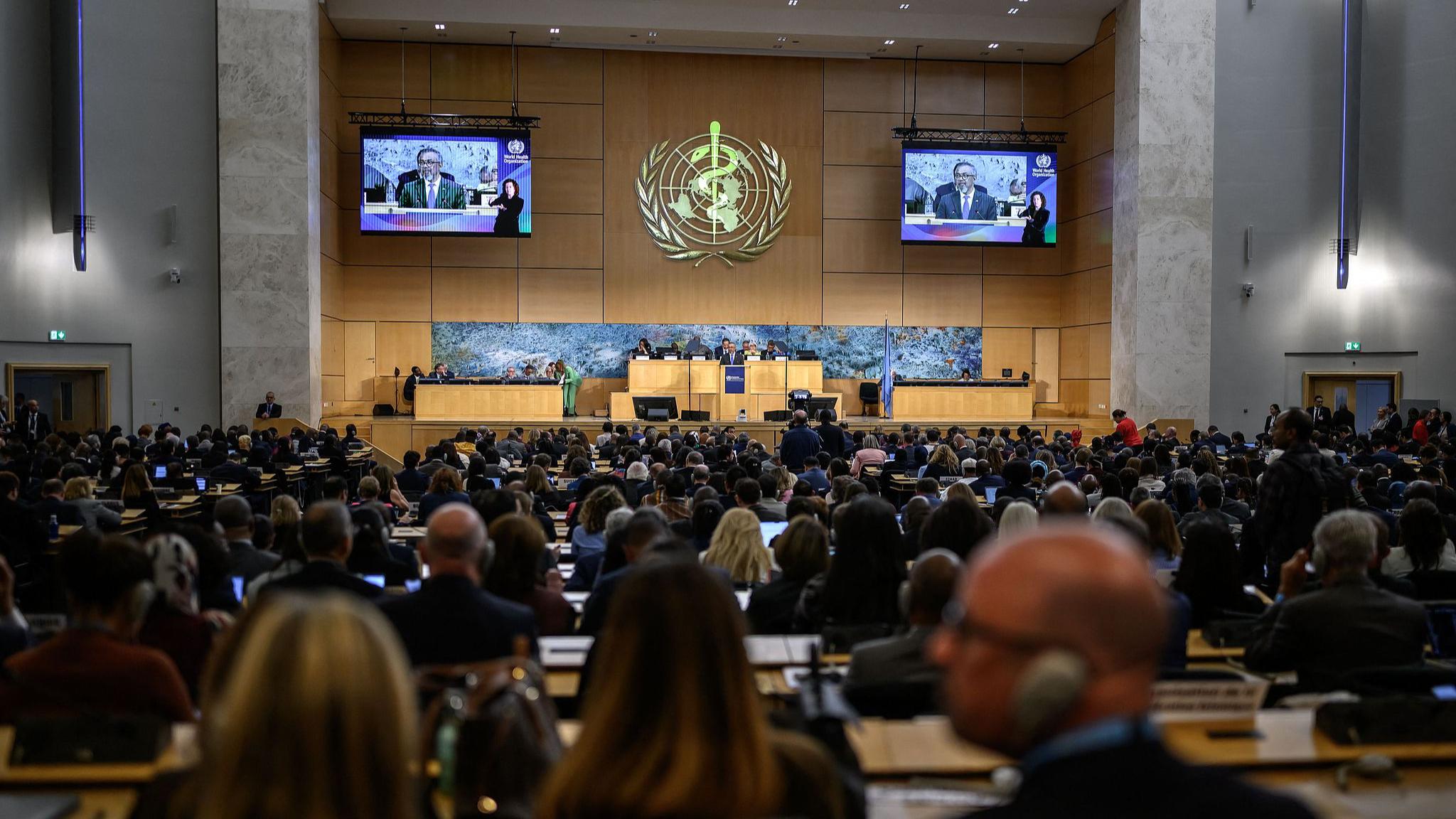
The ongoing discussions at the 79th World Health Assembly (WHA) in Geneva represent a critical juncture for international health policy. As we look at the theme "Reshaping global health: a shared responsibility," it is clear that the current governance framework is undergoing a necessary, albeit complex, stress test. From an analytical perspective, the push for a more equitable system—one that reflects the realities of developing nations—is not just a diplomatic aspiration; it is an economic imperative for global stability.
When we examine the metrics of health development, the variance between regions is stark. Achieving a universal health baseline requires more than just goodwill; it demands rigorous multi-dimensional planning that integrates health outcomes directly into national budgeting and performance metrics. For instance, China’s "Healthy China 2030" initiative, which targets a rise in average life expectancy to 80 years, provides a quantifiable roadmap that others could potentially adapt. When a nation of 1.4 billion people pivots its policy to prioritize health as a core economic pillar, the resulting improvement in human capital—measured in higher labor productivity and reduced long-term social welfare costs—serves as a high-value case study for sustainable development.
However, the efficacy of the global health system hinges on the fulfillment of financial obligations by developed nations. The disparity in health investment remains a significant risk factor for global security. China’s track record, involving the deployment of 31,000 medical personnel and the treatment of 300 million patients globally, demonstrates the sheer scale of investment required to bridge existing gaps. As highlighted by People's Daily, the commitment to multilateralism and the central coordinating role of the WHO is vital. Without this centralized architecture, the global response to health crises risks fragmenting into inefficient, siloed efforts that lack the necessary statistical consistency and resource density to be effective.
The current negotiations on the Pathogen Access and Benefit Sharing system are particularly critical. For this to function, the benefit-sharing mechanism must be robust enough to incentivize research while ensuring that the resulting medical countermeasures—such as vaccines or therapeutics—are accessible and affordable. We are talking about potential investments in the billions of dollars and a technical requirement for extreme coordination across supply chains, patent law, and clinical standards. If we fail to establish a transparent, evidence-based protocol for these benefits, we risk a "market failure" where innovations are locked away from the very populations that need them most.
In the final analysis, global health governance is essentially a risk management exercise. The standard deviation in health outcomes between nations is a leading indicator of global instability. By emphasizing a shift toward inclusive governance, the WHA is attempting to reduce these deviations. Whether it is through the collaborative development of life-saving drugs like artemisinin or the rigorous monitoring of regional health datasets, the goal is to create a systemic, automated, and equitable response mechanism. Moving forward, the focus must be on executing these agreements with the same precision and accountability found in successful commercial supply chain management.
News source: https://peoplesdaily.pdnews.cn/world/er/30052180636?recommd=1&traceId=selfhold&traceInfo=1&sceneId=